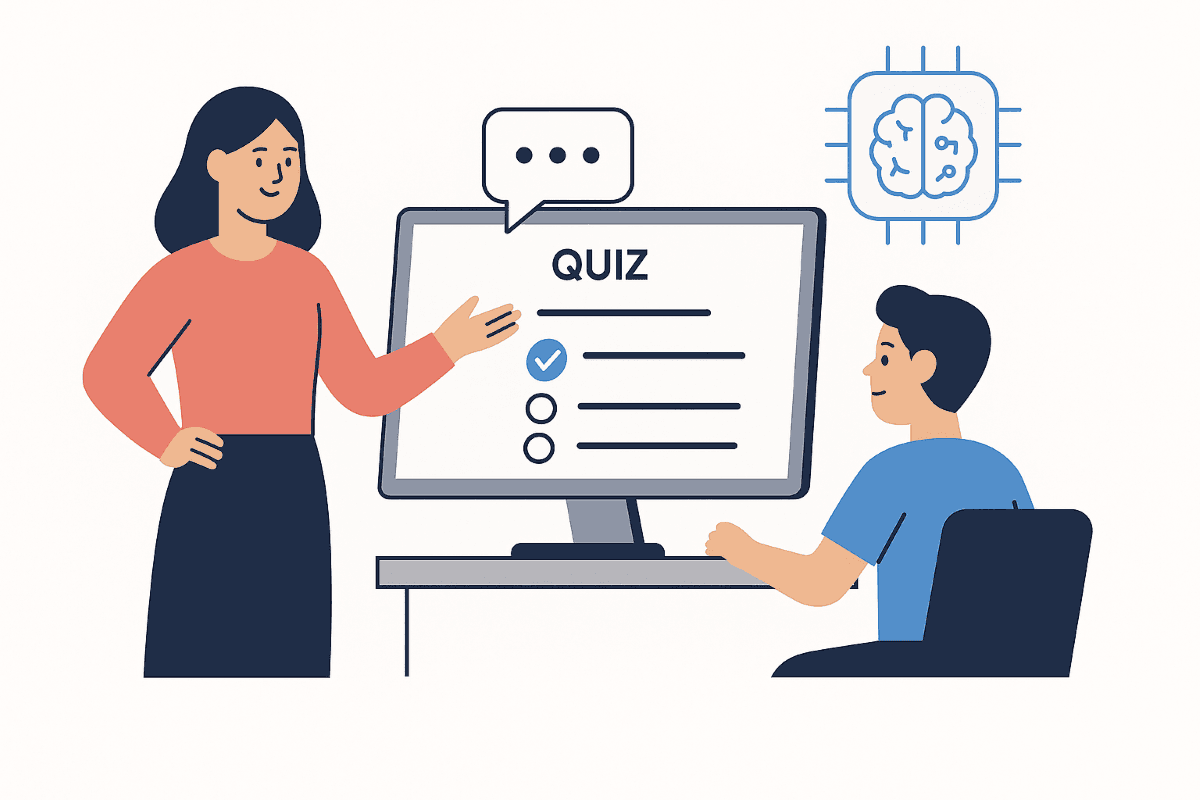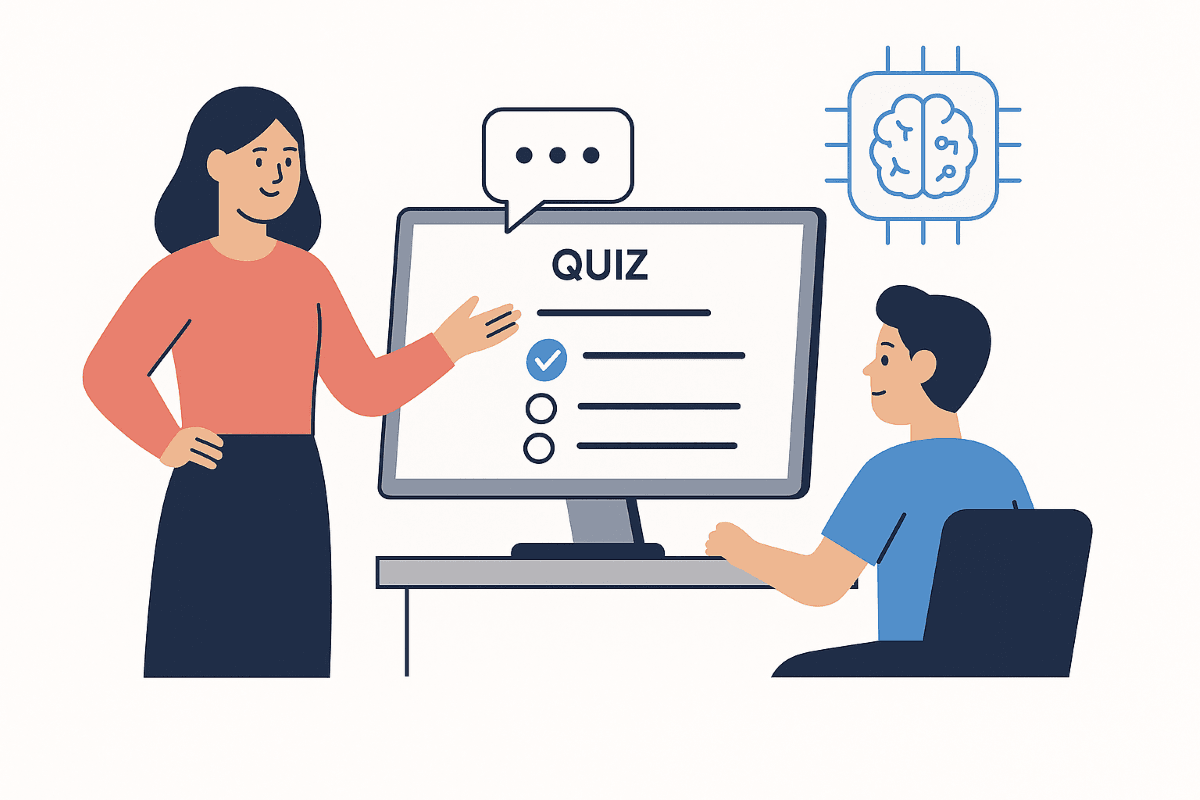
Searches for online AI quizzes are rising because schools and coaching centers want faster assessment cycles without lowering quality. Students also expect instant feedback and focused revision instead of generic worksheets.
This guide explains how to build an online AI quiz system that is useful for users and friendly to search engines. You will see what to publish publicly, what to keep inside logged-in flows, and how to maintain strong content quality.
If your goal is sustainable traffic, stronger engagement, and higher sign-up intent, treat every quiz page and blog article as part of one learning journey, not as isolated assets.
What online AI quizzes should solve
A high-performing AI quiz experience should reduce preparation time, improve recall, and help people act on results. Pages that rank well usually match one of these outcomes clearly.
For teachers
The key intent is speed plus control. Teachers want AI-generated drafts they can edit by topic, difficulty, and question type before assigning.
For students
Students mostly want short, targeted quizzes from notes, PDFs, or class topics, followed by clear explanations and a revision loop.
For institutes
Institutes care about consistency, analytics, and operational scale across multiple classes and faculty members.
When each page states the user outcome upfront, engagement signals improve and bounce rates usually drop.
Keyword clusters that map to user intent
Use one primary keyword and several secondary keywords per article. Keep placement natural in title, description, H2s, and body text.
- Primary keyword cluster: online AI quizzes, AI quiz generator, AI quiz maker.
- Secondary cluster: quiz from notes, quiz from PDF, quiz for teachers, quiz for students.
- Decision cluster: free AI quiz generator, AI quiz generator vs manual quiz creation, best online quiz tool.
- Workflow cluster: formative assessment, revision quiz, quiz analytics, question quality review.
Do not force every keyword in one article. Build topical authority by publishing a connected set of focused pages.
A practical publishing workflow
Create a stable public layer for SEO and keep high-value generation actions behind account access. This protects your APIs and still answers user intent.
Public content layer
Publish tutorials, templates, sample question strategies, and topic guides. Explain outcomes and workflows in enough depth to earn trust.
Logged-in action layer
Ask users to sign up before generating full quizzes or courses. This keeps advanced actions secure and ties usage to real learner workflows.
Optional YouTube input
Offer YouTube as an optional source, not a required field. Most users should be able to start from a topic, notes, or PDF in one step.
Internal links and credibility links to include
Strong internal linking helps users discover next steps and helps crawlers understand your site architecture.
- Internal: https://kuizzo.com/ai-quiz-generator
- Internal: https://kuizzo.com/quiz-from-notes
- Internal: https://kuizzo.com/quiz-from-pdf
- Internal: https://kuizzo.com/ai-quiz-for-teachers
- Internal: https://kuizzo.com/ai-quiz-for-students
- External source: UNESCO AI in education - https://www.unesco.org/en/artificial-intelligence/education
- External source: Google helpful content guidance - https://developers.google.com/search/docs/fundamentals/creating-helpful-content
A balanced mix of internal pathways and authoritative references improves trust for readers and reviewers.
Final takeaway
The fastest route to growth is not publishing thin pages at scale. Build deep, intent-first resources that guide users from discovery to action.
Online AI quizzes perform best when pedagogy, product UX, and SEO strategy are designed together.
Apply this in your next study cycle
Use Kuizzo tools to turn this strategy into action with quizzes, topic-based revision, and measurable learning progress.
Topic cluster
Online AI Quiz SEO and Growth
Top-of-funnel and decision-stage content focused on online AI quiz discovery, keyword coverage, and conversion architecture.
Explore full topic hubSupporting reads