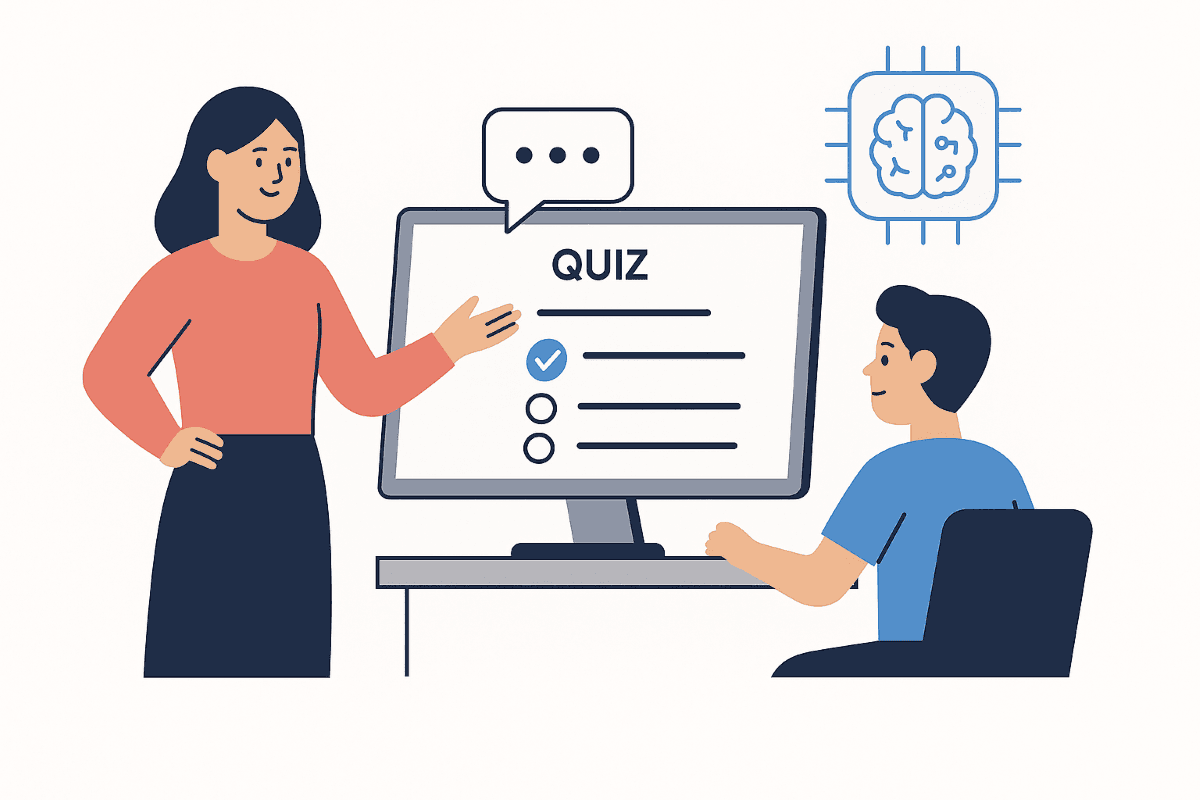
A quiz library becomes messy quickly when naming, tagging, and ownership are inconsistent.
If your institute wants long-term reuse, you need a taxonomy model before the library grows too large.
This guide gives a practical structure for searchable, reusable AI-generated quizzes.
Design a three-layer taxonomy
Use a simple hierarchy so users can find content without guessing.
- Layer 1: Curriculum or exam board.
- Layer 2: Subject and chapter.
- Layer 3: Skill objective or question type.
Review and lifecycle governance
Quiz libraries need governance rules to stay reliable.
- Draft, reviewed, approved, archived states.
- Quarterly refresh for high-usage quizzes.
- Automatic archive for outdated curriculum items.
- Ownership assignment for each taxonomy branch.
Governance keeps quality high as team size and content volume grow.
Links and references
Resources for implementing quiz library operations.
- Internal: https://kuizzo.com/global-quiz-library
- Internal: https://kuizzo.com/ai-quiz-generator
- Internal: https://kuizzo.com/institution-page
- External source: Library of Congress controlled vocabulary basics - https://www.loc.gov/aba/publications/FreeLCSH/freelcsh.html
- External source: Dublin Core metadata initiative - https://www.dublincore.org/
Conclusion
A taxonomy-first approach prevents quiz libraries from turning into unsearchable folders.
Define metadata standards early, enforce review states, and maintain ownership accountability.
Apply this in your next study cycle
Use Kuizzo tools to turn this strategy into action with quizzes, topic-based revision, and measurable learning progress.
Topic cluster
Content Input and Generation Workflows
Operational workflows for generating quizzes from PDFs, notes, and videos with stronger quality controls.
Explore full topic hubSupporting reads